In the sample essay I found using
the same prompt we are, the author describes their view on the relationship
between certainty and doubt. It takes a fairly interesting and developed stance
that certainty does not exist at all and uses evidence drawn from philosophy and
psychology in order to support it. The structure of the essay is organized; it does
not feel forced into paragraphs but rather flows naturally. I noticed that the transitions
are not obvious words, but rather ideas that clearly lead into each other. He
or she does not use the typical transition words and phrases to move from one
topic to the next. The author’s command of language is impressive as well
adding a more sophisticated or knowledgeable air to the essay. I also noted
that the use of second person in the beginning helps to pique the interest of
anyone reading this essay as they ask you to “abandon your concept of
reality; you must lose the certainty that binds you to your convictions and knowledge,
for certainty is but a delusion, and doubt is the beginning of overcoming it,”
which also doubles as his or her thesis.
Sunday, February 22, 2015

Monday, February 16, 2015
TOW #19 "Greek Religion" (IRB- 1st half)
In this
book, the author explores different stories and tales that have influenced and
expanded the Greek religion. Rather than sticking to the ones everyone seems to
already know about, they used ones many haven’t even heard of very often to give
more to the topic. I have always been interested in Greek mythology and this
seems like a great way to find out and hear stories I cannot find on Wikipedia.
This book may also expand my horizon of topics within Greek mythology and
religion. I only have a general knowledge of certain gods, goddesses, and
events, and I would love to know more. There are going to be many topics in
this book that I have never even heard of -- I can tell just from looking in
the table of contents-- so I am looking forward to that. It helps
achieve his purpose since he is proving that there is more to Greek religion
than most know, because he is using stories that many average readers may not
be familiar with even if they thought they were someone that knew a lot about
the Greek religion beforehand. So far, this has remained effective and should
continue throughout the novel.
Sunday, February 8, 2015
TOW #18 "Fiber Castell: True Colours" (ad)
In this ad, Fiber Castell is
advertising just how true the colors of their colored pencils are. They
displayed this in an interesting and very creative way, having the back end of
a dachshund being morphed into the point of a colored pencil that matches the
coloring of the dog itself. This is used to show that when you draw and/or
color with Fiber Castell pencils, you had might as well be drawing with the
real this that is that color. The plain and simplistic background helps keep
the audience focused on the strange spectacle in the center. It could also be a
slight representation of the blank page an artist could be using their colored
pencils on to create a masterpiece with their “true colours.” The ad itself is
fairly eye catching even though the colors are muted and dull, but the thing
that is eye catching about it is the morphing of the dog and the colored
pencil. At first when I saw it I had no idea what it was supposed to be, but
when I looked again, I could tell that it was a dog and a colored pencil and I
thought it was really clever and innovative of Fiber Castell to have that for
an advertisement. All in all, I feel as though it is something that you may start
to scroll past, but before it can disappear, you will look at it again and it
will be hard to look away.

Wednesday, February 4, 2015
IRB Intro #3 "Greek Religion"
In Walter Burkert’s book on Greek
Religion, he sets out to prove that even though it has always seemed familiar,
it is a historical phenomenon. I have always been interested in Greek mythology
and this seems like a great way to find out and hear stories I cannot find on Wikipedia.
This book may also expand my horizon of topics within Greek mythology and
religion. I only have a general knowledge of certain gods, goddesses, and
events, and I would love to know more. There are going to be many topics in
this book that I have never even heard of (I can tell just from looking in the
table of contents), so I am looking forward to that.
Sunday, February 1, 2015
TOW #17 "Let's Die Together" (written)
In David Samuel’s essay, Let’s Die Together, he addresses the
topic of the rising popularity of group suicides in Japan during the early
2000s. Samuel uses specific dates, statistics, and instances in which these
events have taken place. The narrator even noticed a pattern in the reports. “The
victims meet online, using anonymous screen names, and then take sleeping pills
and use briquettes, charcoal burners, and tape to turn a car or van into a
mobile gas chamber.” The narrator does keep the tone fairly neutral and stays
informative. He doesn’t use much expressively emotion-driven language
throughout the essay, giving it a rather objective feel and mood. The text
seems almost like a report of the events to superior rather than an essay
written for a general audience due to the author’s diction and phrasing
patterns. Though, something that benefits average readers would be that he does
give background information, an example being the mention of seppuku, the Japanese ritualistic
suicide practice, as a possible explanation for why this group suicide trend
has been so popular in Japan. He also talks about how difficult it is to pursue
these situations since suicide is not a crime. Many of these group suicides
have only been noted through minor reports due to them not being against any
laws. All in all, the essay is mainly formally written and informative about
the topic.
Monday, January 19, 2015
TOW #16 "Gunn's Golden Rules" (IRB- 2nd half)
In Gunn’s Golden Rules, Tim Gunn takes the
audience through times in his life that he has had to “make it work” in tough
situations. He explores positive moments as well as some negatives, hoping
others can learn from his own mistakes. His main goal is for others to have good
manners, an open mind, and to not let a difficult time get in your way of what
you want. He uses anecdotes to tell how each experience reflects his intentions
on the reader learning from his mistakes and moments, while being able to
connect with some as well. Other things that are of his own interpretation are
his descriptions of other people. Gunn loves fashion and can therefore describe
a person’s outfit accurately, along with his opinion on it. He is careful not
to allow his opinion to skew the visualization of the person, though. Since it
is autobiographical, there are plenty of opinions about things, situations, and
people he encounters. A main component to the message is his view on manners. He
then continues to portray the purpose of his writing. Even with the multiple
events he recalls, the point is never lost. From reading it, the message is
quite clear. In the book, Gunn takes you through moments in his life that
changed his ways of thinking. He in turn hopes that the readers’ thinking can
be changed as well.
Sunday, January 11, 2015
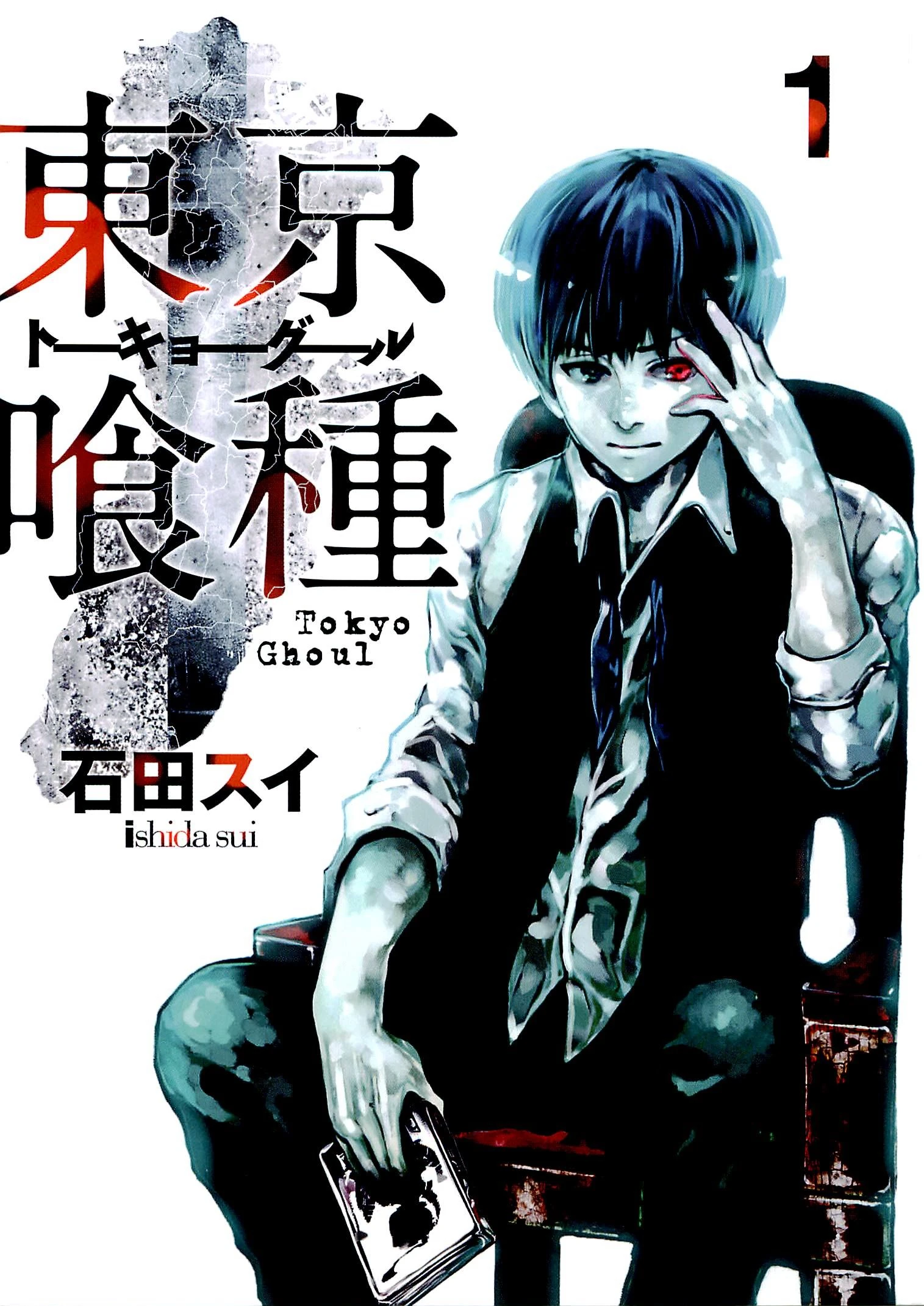
TOW #15 "Tokyo Ghoul: The Ani-TAY Review" (written review)
In this
review, Ani-TAY explains both good and bad points of the recent, and fairly
popular, anime called Tokyo Ghoul. He starts out with a brief description of
the plot and characters, and later elaborates on specific points he finds “fantastic”,
“not bad”, and “terrible.” He talks about everything from voice actors to censoring.
In each separate topic’s paragraph, Ani-TAY gives his opinion and uses specific
evidence from the show or others for comparison. Under the “fantastic” heading,
he lists the tragedy aspect of the storyline, the fact that the main character
is forced to give up part of his humanity, the range of the voice actors, and
the beauty of the animation. He explains what he loves about each topic and
why. An example would be how specific voice actors are put into roles that are
very ouside of what their “type-casting” usually is, like Mamoru Miyano and
Kana Hanazawa. In the “not bad” section, he lists the odd censoring and how
they rushed through the last arc. In Tokyo Ghoul, they use two types of
censoring. “First is the standard and craptastic "let's just cover all the
offensive bits in black" type of censoring, the second is it will invert
the colors of the scene.” Ani-TAY dose prefer the inverted over the random
shadow, as many others do. If his exasperated tone wasn’t enough to realize
that, he does outright say it. The sole topic under the “terrible” title would
be the ending. Even though Ani-TAY hadn’t read the manga (original comic), he
still felt the ending was a little abrupt. They did in fact end the first
season in the middle of an arc, and anyone can tell. The author dubs Tokyo Ghoul
(season 1) as “yet another member of the Disappointing Ending Club.” Though,
all in all, Ani-TAY gave it a good review, being sure to give specifics in
recommending and not recommending since it is a horror anime, there will be
blood. He even calls it one of the best he’s seen since Another, one other
successful horror anime.
Subscribe to:
Comments (Atom)